
Training that builds businesses with Premier Credit Kenya
With support from Abler Nordic’s Norad-funded Technical Assistance (TA) facility, Premier Credit is helping low-income entrepreneurs gain the skills, confidence and tools they need to grow their businesses and achieve long-term resilience.
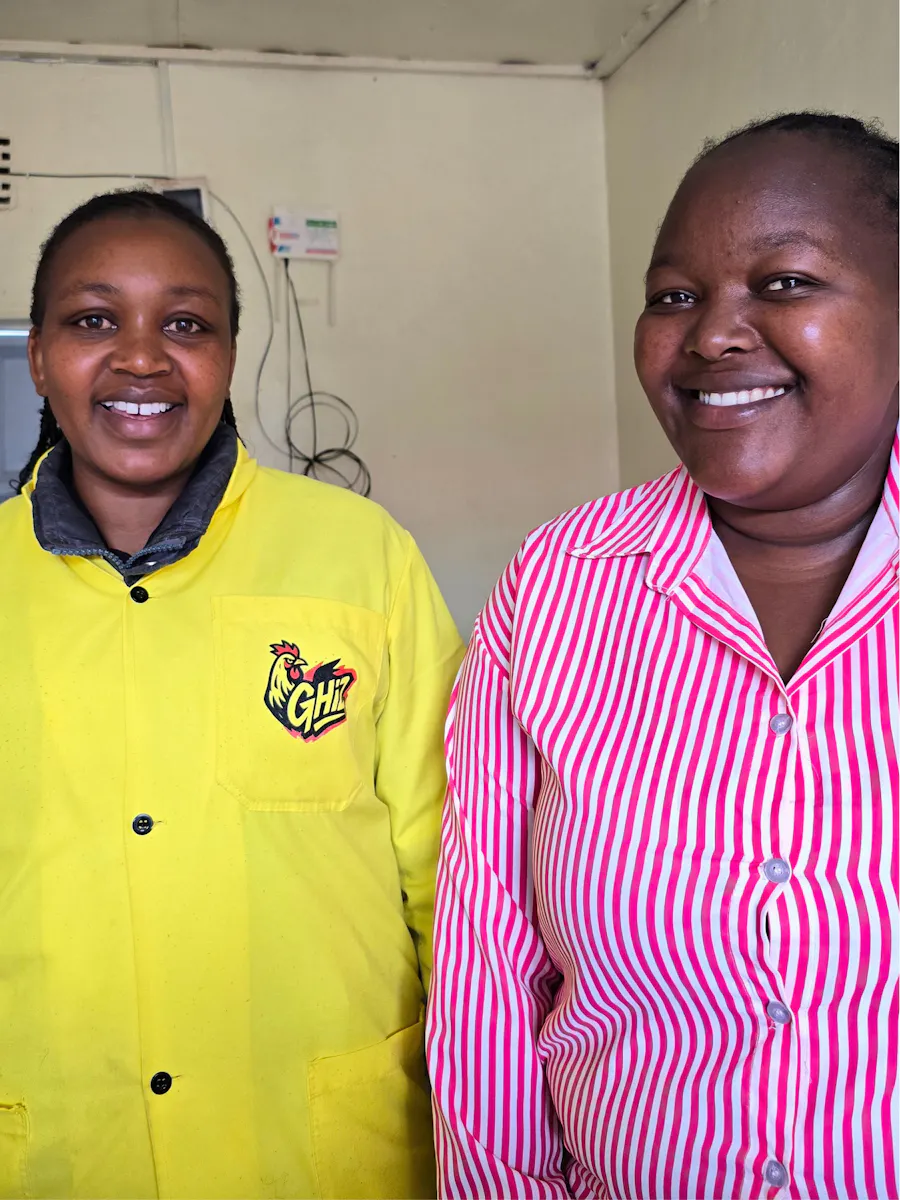
When Veronica Ngendo, owner of Ghiz Chicken and Milk in Limuru, Kenya, talks about her business today, the change is obvious. “Sales have increased since we have started doing deliveries. We are the only shop that does so, and that makes us stand out,” she says. What began as a small adjustment has become a key competitive advantage— one that is helping her business grow, even as she navigates the everyday challenges of running a small business.
Veronica is a customer of Premier Credit Kenya—a credit-only microfinance institution providing affordable finance to micro, small, and medium-sized enterprises (MSMEs). In 2024, Abler Nordic and Norfund co-invested USD 16 million in Premier Credit to boost access to finance for entrepreneurs often overlooked by traditional banks.
Like many small business owners, Veronica faces ongoing hurdles—finding and keeping customers, tracking cash flow, and staying on top of expenses.
Turning finance into business
To help entrepreneurs overcome these gaps, Abler Nordic’s Norad-funded Technical Assistance (TA) facility has worked closely with Premier Credit on a project designed to teach essential business management and financial literacy skills.
The TA facility aims to build capacity across Abler Nordic’s portfolio, funding projects which aim to strengthen resilience,Vero increase access to financial services, and create opportunities for self-employment and increased income for low-income households.
For this project, Charity Nganga, a Client Officer at Premier Credit Kenya, was one of 40 staff who participated in a four-day training program delivered by MDF, equipping participants with practical skills in financial management, marketing, and business planning. A train-the-trainer approach enables participants to mentor clients and run regular, structured training sessions for colleagues at their branches.
With Charity’s guidance, Veronica is putting her new skills into practice. Small changes are quickly adding up, showing how targeted support from the TA facility to improve financial literacy helps entrepreneurs thrive.
Simple steps, significant growth
We spent a morning out-and-about with Charity visiting clients in Limuru, including Veronica’s chicken shop. Her rosy-pink shopfront stands out on the street, with posters of chicken cuts lining the doors and fresh chicken and eggs neatly stacked behind the blue grille.
“It’s a family business,” explains Veronica. “I run it with my husband Gadson, and we also have one worker. We’ve been working for three years now—and so far, so good. From the time we started, the business has grown. We have created good relationships with our customers.”
Charity has helped Veronica recognize the full potential of her business and apply practical steps to grow it. “I introduced Veronica to strategies so more people could find her business, like handing out flyers with each order she sells, so they can be passed on to other people,” explains Charity. “I also trained her in digital marketing. She’s been using TikTok for sales, and it has really helped her improve her profits.”
Watching Veronica work, Charity points out how much of the business now happens beyond the shop itself, with orders prepared throughout the day for delivery rather than sold only across the counter.
Improved financial literacy has helped Veronica tackle challenges she previously struggled with, such as monitoring expenses and paying herself a consistent salary. With a clearer view of her finances, she can now plan ahead more easily and reliably cover her three children’s school fees.


Financial management that builds businesses
Next stop across town is visiting owner of Mzalendo Pharmacy, Samuel Kanyango—a Premier Credit client since 2016. “The main purpose of our loans is to buy more stock for the pharmacy, and Premier Credit really help us when we need capital. We have seen progress with them,” he explains.
While the loans allowed Samuel to maintain and expand his inventory, it was improved financial management that made his business more profitable. By properly tracking expenses for the first time, Samuel gained a much clearer picture of his cash flow. This allowed him to make informed decisions about stock, spending, and savings—and to understand what his business was actually earning.
“He can now see how much business capital he has, how much is being used at home, and what his actual profit is,” says Charity. “Before, he couldn’t see this, so he was always dipping into his pocket without knowing what was happening.”
With better control over his finances, Samuel finds it easier to plan for his household expenses—including school fees— and has set aside money to make improvements to his home.
“You have to know what you’re doing in business — how much money comes in and goes out, and how much to set aside,” acknowledges Samuel. “That way, when unexpected expenses come up, you don’t have to borrow. You plan ahead and save for it.”
This shift matters not just for clients, but for Premier Credit as well. Good financial management helps clients avoid taking on too much debt and stay in control of their money. When clients can comfortably manage repayments on time, they minimise their own financial stress and help Premier Credit remain financially stable—enabling it to expand responsibly and reach more low-income customers.


A Ripple Effect Across the Team
Charity has put the train-the-trainer approach into practice at the Limuru branch, running Monday training sessions for her colleagues.
“Before, we had gaps in our knowledge, but after Charity’s training, we feel we are in a better position,” notes Branch Manager Daniel Ndungu. “Customers are being enlightened—they’re being educated on how to make better margins, keep records, and separate household expenses from business expenses.”
Officers were trained not just in content, but in teaching methods, making them effective mentors who can share knowledge widely across branches. The training sessions include practical exercises, case studies, and role-playing to help staff translate theory into actionable strategies they could use with clients.
Heidi Våge, Manager of the Abler Nordic TA facility, adds, “Each Client Officer becomes a hub of knowledge, supporting clients and colleagues alike. This multiplies the impact far beyond any single workshop.”
Looking ahead
Chicken shop owner Veronica is thinking big. “I'm planning to open more branches, and I believe it’s possible. So far, I’ve seen the business grow from one level to another,” she says. “My goal is to provide a good education for my children. Maybe one day, one of them will take over the shop!”
Samuel is thinking just as ambitiously. Equipped with stronger financial literacy and business skills, he is no longer focused only on meeting immediate needs. “My dream is to become a big wholesaler. It’s there, it’s my goal. Right now, I’m focusing on providing for my family, but there’s still much more I want to do.”
Abler Nordic is now exploring how the project can also be adapted across Abler Nordic’s wider portfolio in Africa, as well as in Southeast Asia and India, adapting training to local contexts and challenges.
Building on the financial literacy training, the TA facility is in the early stages of a project supporting Premier Kenya in developing an impact measurement system to track clients’ financial well-being and business outcomes, ensuring insights from client experiences inform future training and product improvements.
“Learning how to run a business effectively empowers entrepreneurs to make their income work harder, absorb shocks, and create opportunities for growth. That resilience is what helps families thrive,” says Heidi.

